
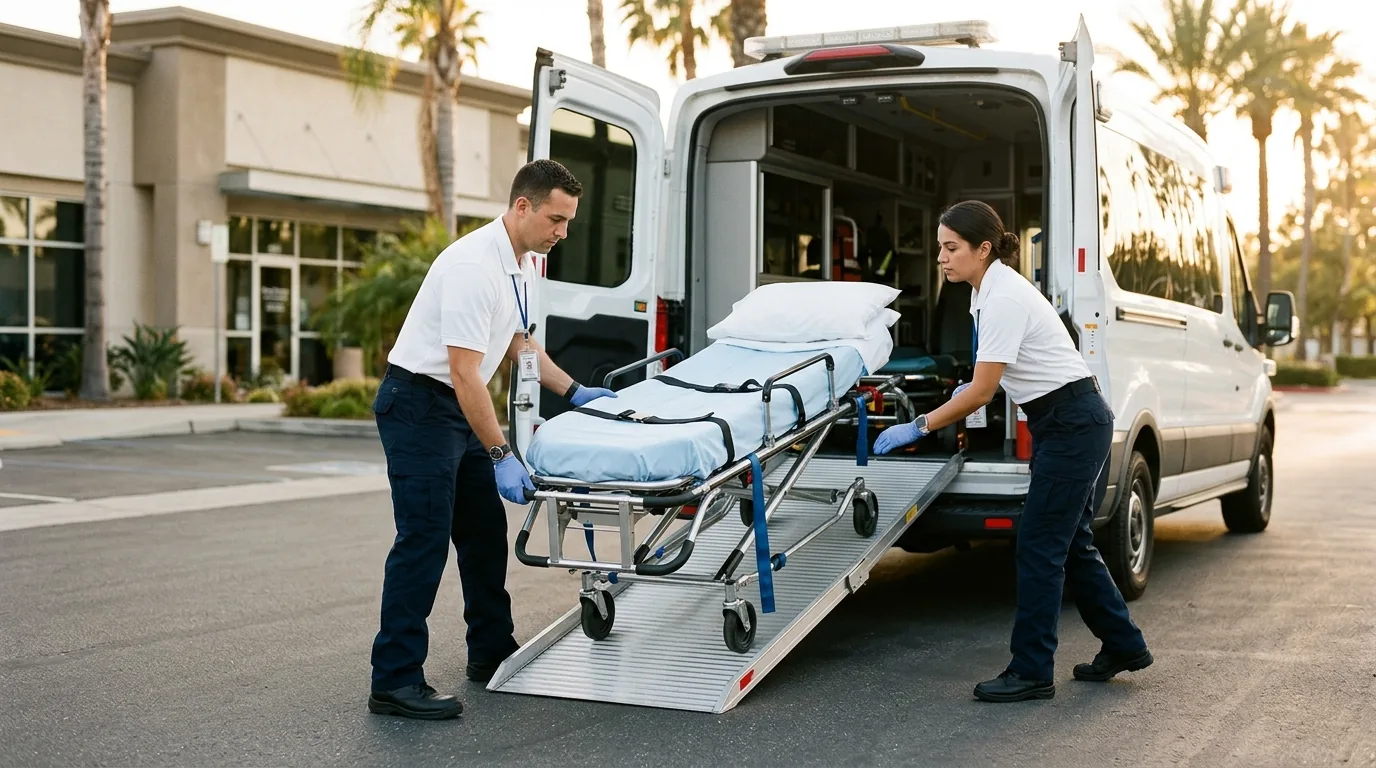
The first time a parent or loved one rides in a medical transport van, everything is new. A new driver. A new vehicle. A ramp or a stretcher. If the rider has dementia or significant anxiety, the unfamiliar can feel scary. Good preparation changes the whole experience, and it is almost entirely the caregiver who sets the tone.
The night before
Pack a small bag with ID, insurance cards, a short medication list, and a snack or water bottle if approved by the clinic. Charge any mobility device battery, including hearing aids. Write the pickup time in two places - a phone calendar and a paper note by the door.
If the rider has dementia, talk through the next day at a slow, calm pace. Use the same language the driver will use. Avoid medical jargon that might confuse or alarm.
The morning of the ride
Be ready 15 minutes before the pickup window. That gives time for a quick bathroom visit and to move from the couch to the front door without rushing. Have the mobility aid (walker, cane, portable oxygen) within reach at the door.
When the driver arrives, greet them by name if possible - DayLight provides the driver name in advance for recurring riders. Introduce the rider to the driver. A short, warm introduction lowers the threshold for the rider to trust the ride.
Riding along on the first trip
If at all possible, a family caregiver should ride along on the first trip. You do not need to attend the appointment - you can wait in the lobby or run an errand nearby. The point is to be there for the pickup, the ride, and the drop-off. Seeing the process once usually makes the rider comfortable enough to go solo afterward.
On the ride home, ask the rider what felt good and what was uncomfortable. Small adjustments to the next ride - an earlier pickup, a warmer cabin, a different seat - can make a noticeable difference.
Handling anxiety or dementia
For riders with anxiety or dementia, keep the environment predictable. Play the same music you usually play at home. Bring a comfort object. Stay quiet if that is what usually helps. If a particular driver gets along well with the rider, ask dispatch to assign that driver for every recurring trip. DayLight defaults to consistent driver assignment for exactly this reason.
Key takeaways
- Prepare a small bag with ID, insurance, meds list, and snack or water.
- Ride along on the first trip to set the rider at ease.
- Introduce the rider and driver by name. Warmth matters.
- Ask for the same driver on recurring rides to build familiarity.